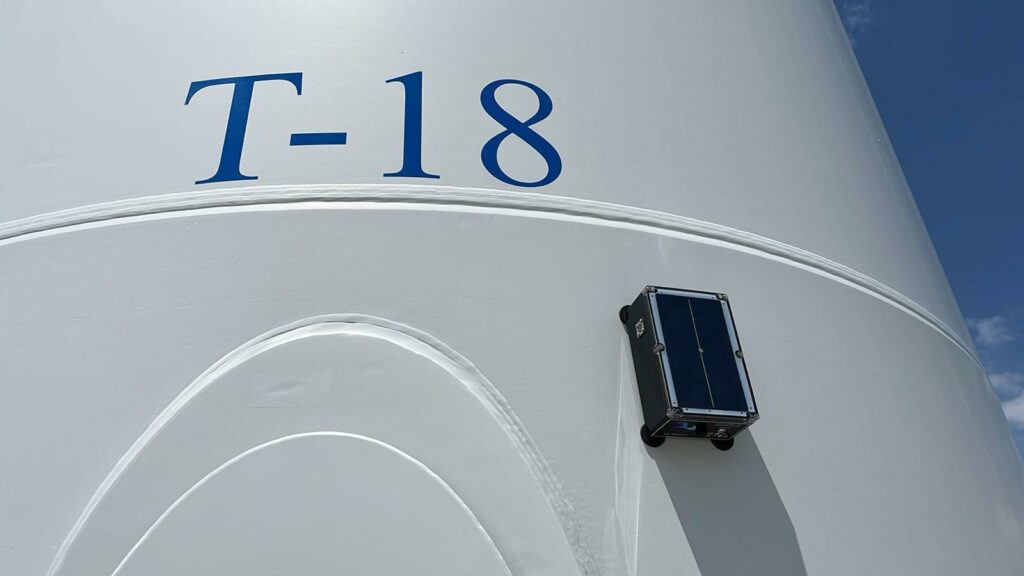
In the digitalization of the renewable energy sector, the phrase “industrial grade” is often thrown around loosely. However, for wind farm operators, the reality of the field is far harsher than any controlled test chamber. Wind turbines are intentionally placed in environments with the highest wind resources—which inevitably means the most punishing weather conditions on Earth. From the freezing gales of the North Sea to the scorching heat of desert installations, IoT hardware must survive where humans cannot.
For a Condition Monitoring System (CMS) to be truly effective, it must do more than just survive; it must perform flawlessly during the very storms that threaten the asset. This is the challenge of IoT Sensor Resilience.
The “Unforgiving” Environment: Why Standard IoT Fails
Standard consumer-grade or even general industrial IoT devices often fail rapidly in wind energy applications due to three primary stressors: Thermal Shock, Moisture Ingress, and Vibration.
The Freeze-Thaw Cycle
In cold climates, temperature swings are brutal. A device might be exposed to direct sunlight during the day and freezing winds at night. This rapid expansion and contraction of materials can compromise seals, leading to condensation inside the enclosure. Once moisture breaches the casing, sensor corrosion is inevitable.
Corrosive Salinity and Moisture
For offshore and near-shore farms, salt spray is a relentless enemy. It accelerates oxidation on connectors and solar panels. A resilient sensor requires not just a “water-resistant” coating, but a hermetically sealed enclosure designed to repel chemically aggressive saline moisture for years without maintenance.
Engineering for Survival: The “Ice-Block” Proof
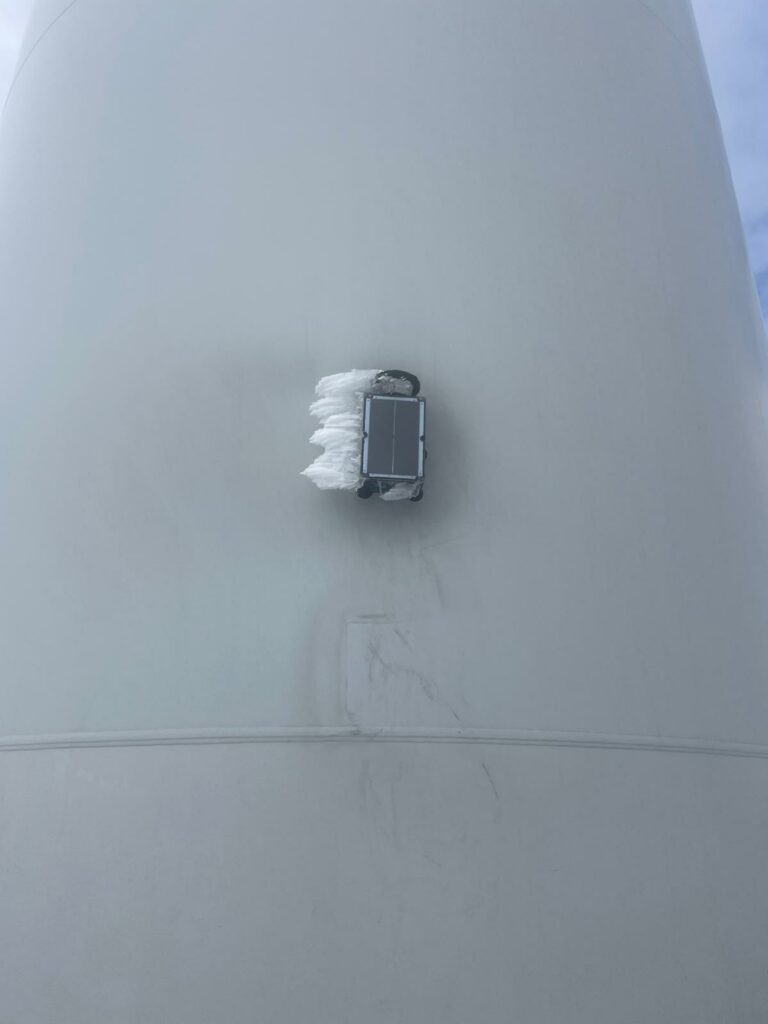
True resilience is proven when the hardware continues to stream data under impossible conditions. One of the most compelling testaments to Windrover’s engineering is its performance under heavy icing.
Operating Under a Layer of Ice
There are documented cases in the field where the IoT device itself becomes completely encased in a thick block of ice due to freezing rain and rime accumulation. In a standard scenario, one might expect the device to shut down due to thermal blockage or battery failure. However, resilient designs utilizing IP68-rated enclosures and advanced thermal management allow the sensors (acoustics, IMU, etc.) to continue functioning.
Even when buried under ice, the acoustic sensors can still detect the structural vibrations and sound anomalies of the turbine blade. This capability is critical because the moments of heavy icing are exactly when the turbine is under the highest structural stress and most prone to damage.
Impact and Vibration Resistance
Wind turbines are dynamic structures. The tower sways, and the nacelle vibrates. A tower-mounted device must withstand constant low-frequency vibration without losing its magnetic grip or suffering from internal component fatigue. Using military-grade magnets and shock-absorbing internal mounts ensures that the device stays fixed and functional, even during a Category 1 hurricane.
Power Autonomy: The “No-Sun” Challenge
Resilience is not just about physical durability; it is also about power availability. A sensor that survives the storm but goes offline because its battery died is useless.
Hybrid Power Management for Winter
In high-latitude regions (like the UK or Scandinavia), winter days are short and often overcast. A strictly solar-powered device would struggle to maintain connectivity. To counter this, resilient IoT systems employ a Hybrid Power Architecture:
- High-Efficiency Solar Panels: Optimized to capture diffuse light, not just direct sunlight.
- High-Capacity Battery Buffers: Designed to store enough energy to run the device for up to 3 months without any solar input.
This ensures that during the “dark months”—when maintenance vessels are grounded and visual inspection is impossible—the monitoring system remains 100% active, acting as the operator’s eyes and ears.
Conclusion: Reliability as a ROI Metric
In the end, the resilience of the monitoring hardware is directly tied to the Return on Investment (ROI). A cheap sensor that fails after one winter requires a replacement visit, which can cost thousands of dollars in technician time and vessel charter—far exceeding the cost of the device itself. Investing in rugged, proven IoT hardware like Windrover is not just a technical preference; it is a financial safeguard against blind spots during the most critical weather events of the year.